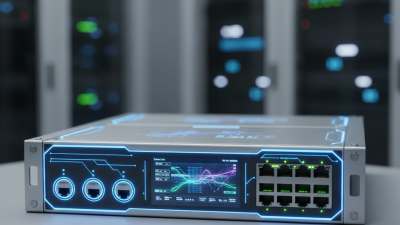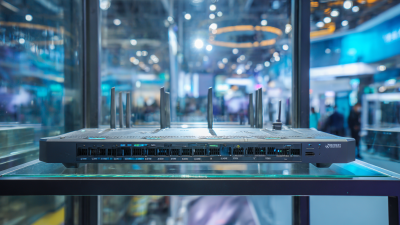
China’s network-equipment market includes manufacturers serving offices, campuses, factories, and small businesses. For buyers, a Web Managed Switch can offer practical controls—such as VLAN configuration, traffic monitoring, and browser-based administration—without the cost or complexity of a fully managed enterprise platform. The details matter. A tidy interface alone does not prove dependable hardware or long-term support.
Market context helps explain the interest. Grand View Research estimated the global Ethernet switch market at USD 17.89 billion in 2023 and forecast growth to USD 37.09 billion by 2032. That figure covers a broader product category, not Web Managed Switches alone. This distinction is easy to miss. It also means the estimate cannot identify China’s leading manufacturers by itself. IDC’s Worldwide Quarterly Ethernet Switch Tracker provides another useful reference, tracking vendor revenue and market performance across the wider Ethernet-switch sector.
This guide examines Chinese manufacturers through more practical questions: product range, port and uplink options, management features, warranty terms, and access to technical support. For example, a buyer comparing two 24-port models should check whether both support VLANs, fanless operation, and the required uplink speeds. Published specifications help, but they do not replace testing in the intended network. No single ranking fits every deployment. Supplier claims should be checked against datasheets, certifications, and service arrangements before purchase.
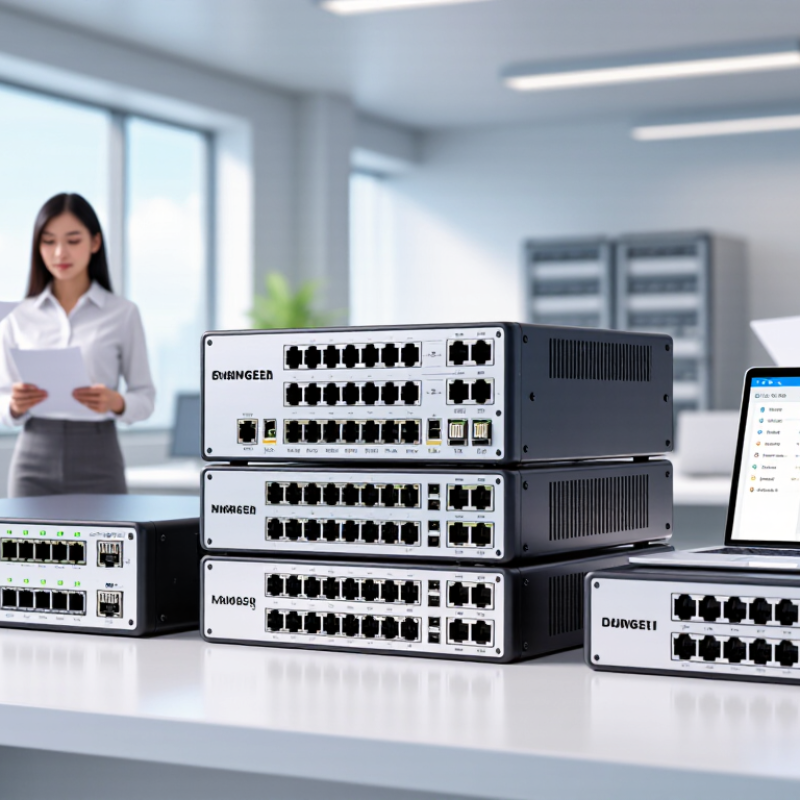
A web managed switch connects devices on a local network and lets an administrator configure them through a browser. Each port forwards Ethernet frames using learned MAC addresses. Unlike an unmanaged switch, it offers controls such as VLANs, traffic prioritization, port monitoring, and loop prevention. The web interface displays port status and counters, so an installer can spot a disconnected cable or rising error count without visiting every device.
IDC’s Worldwide Quarterly Ethernet Switch Tracker reported global Ethernet switch revenue of about $44.2 billion in 2023, underscoring the scale of networks these devices support. Revenue does not measure switch quality, though.
In practice, an administrator signs in, assigns ports to VLANs, and sets rules for traffic between groups. A camera port might carry video traffic, while office computers use another VLAN. The switch applies those settings as frames arrive. Some models also support Power over Ethernet, supplying power to compatible devices through network cables. Configuration menus vary, and a poorly planned VLAN can interrupt access. Test changes on a spare port when possible.
Tips: Change default credentials, keep management access on a dedicated VLAN, and save a backup configuration. Check link speed, errors, and PoE load after installation. Small checks matter. A web-managed switch gives useful control, but it still depends on careful setup and ongoing updates.

China’s web managed switch industry is not a single, uniform market. It includes hardware developers, design-focused firms, contract manufacturers, and export-oriented suppliers. Some companies develop circuit boards and firmware in-house. Others assemble established platforms and adapt interfaces, port counts, or enclosures for buyers. The distinction matters. A polished product page does not show who controls firmware updates or component selection.
Production networks may link PCB assembly, metalwork, power components, testing, and logistics. This can shorten sourcing cycles, but it does not guarantee consistent quality. Differences in thermal design, soldering, or firmware validation can affect reliability. A practical review should check operating-temperature ratings, VLAN and QoS behavior, update procedures, and test reports. Ask for a sample. Test it with the traffic pattern the installation will actually carry. Some details get missed.
Sales channels include direct factory export, trading companies, and regional distributors. Each offers different support and customization options. Direct sourcing may simplify engineering discussions, while distributors may provide local stock or installation help. Before ordering, verify warranty terms, spare-unit availability, documentation quality, and response times. Claims such as “industrial-grade” need evidence, not just labels. Even capable suppliers may have uneven documentation, so check it early.
China’s key players in web-managed switches generally fall into three groups: large networking-equipment manufacturers, focused switch specialists, and OEM or ODM producers. Their products may look similar on a specification sheet, but the engineering priorities differ. A factory focused on volume may offer broad port options and competitive pricing. A specialist may provide clearer configuration tools, stronger support for VLANs, and more careful firmware updates. Industrial suppliers often prioritize metal housings, wider operating temperatures, and stable links in cabinets near motors or other electrical equipment.
The details matter. Check how the web interface handles VLAN setup, port mirroring, and recovery after a power loss. Ask for firmware update records and a realistic support response time. A polished datasheet is not proof of dependable field performance. Test a sample under your own network load, and confirm that the management interface remains responsive during routine changes. This division is useful, though not perfectly neat. Some manufacturers serve several markets at once, and product quality can vary between models. The most credible supplier is usually the one that answers technical questions precisely, provides consistent documentation, and can explain limitations without overselling the switch.
Chinese manufacturers of web-managed switches often cover a broad range, from compact desktop units to rack-mounted models for busy networks. Entry-level lines typically provide 8 or 16 Ethernet ports, basic VLAN setup, and simple traffic monitoring. Larger models may offer 24 or 48 ports, faster uplinks, and features such as link aggregation, QoS, and access control lists. Some include PoE, but power budgets and supported standards vary, so check the specifications rather than relying on the port count alone. Small details matter.
Tips: Compare the web interface, firmware update process, and clear documentation. For PoE, calculate the total wattage needed by cameras or access points, not just the maximum per port.
Capabilities differ even when two switches list similar features. One interface may make VLAN changes easy; another may bury settings in several menus. Fanless models suit quiet offices, while rack units may handle heavier workloads but need space and airflow. Ask for test results, warranty terms, and support response expectations. A product sheet cannot show how intuitive setup feels, and I would not assume every feature works equally well across models.
When evaluating web-managed switch manufacturers in China, start with the network conditions the equipment must handle. Check port counts, switching capacity, PoE budgets, and support for VLANs, QoS, and link aggregation. A small office may need quiet, fanless hardware; a factory cabinet may need stronger heat tolerance. Details matter.
Test the management interface, not just the specification sheet. Can staff find port errors, review traffic, and change settings without digging through menus? Look for clear event logs, practical monitoring, and documented recovery steps. Security update frequency also matters. Ask how long firmware support is expected to continue, and how release notes explain fixes. A polished dashboard can still hide weak diagnostics.
Reliability claims should have evidence behind them, such as burn-in procedures, temperature testing, and consistent quality checks. Request warranty terms, spare-part availability, and realistic repair timelines. Technical support should explain configuration issues clearly, ideally with usable manuals and firmware guidance. Certifications can help, but verify that they apply to the exact model being considered. A datasheet cannot predict every deployment problem; I would treat sample testing as useful, though sometimes inconvenient. Test under actual traffic, with the cables, access points, and power demands the installation will use.