China Top POE Splitter Manufacturers for Global Buyers
China has become a major sourcing base for reliable network power products. Its manufacturers serve installers, distributors, telecom projects, security integrators, and industrial buyers worldwide. This article examines China’s top Poe Splitter manufacturers through a practical buyer’s lens.
A Poe Splitter separates electrical power from Ethernet data. It helps non-PoE devices, such as wireless access points, cameras, sensors, and compact routers, operate through existing network cables. Peter Jones, a recognized Ethernet Alliance expert, has described the principle simply: “Power and data can share the same Ethernet cable.” That idea sounds straightforward. Product selection is not.
A dependable supplier must understand IEEE 802.3af, 802.3at, and 802.3bt requirements. It should also verify output voltage, power budget, isolation, thermal control, surge protection, and connector quality. Certifications matter. So do factory testing records and traceable quality procedures. A polished website proves very little.
This guide compares Chinese manufacturers using evidence rather than marketing language. It considers engineering capability, customization, minimum order quantities, lead times, export experience, and after-sales support. Real projects often expose small weaknesses. A splitter may pass a basic test yet fail under heat, cable loss, or unstable input power.
No shortlist is perfect. Buyer priorities differ. Some need low-cost indoor units. Others require rugged outdoor housings, industrial temperature ratings, or private labeling. Careful sampling remains essential. Test the actual model, not only the brochure. Ask difficult questions early. Reliable sourcing begins with measurable performance, transparent communication, and a supplier willing to correct mistakes.
POE Splitter Technology and Its Role in Network Power Delivery
China Top POE Splitter Manufacturers for Global Buyers
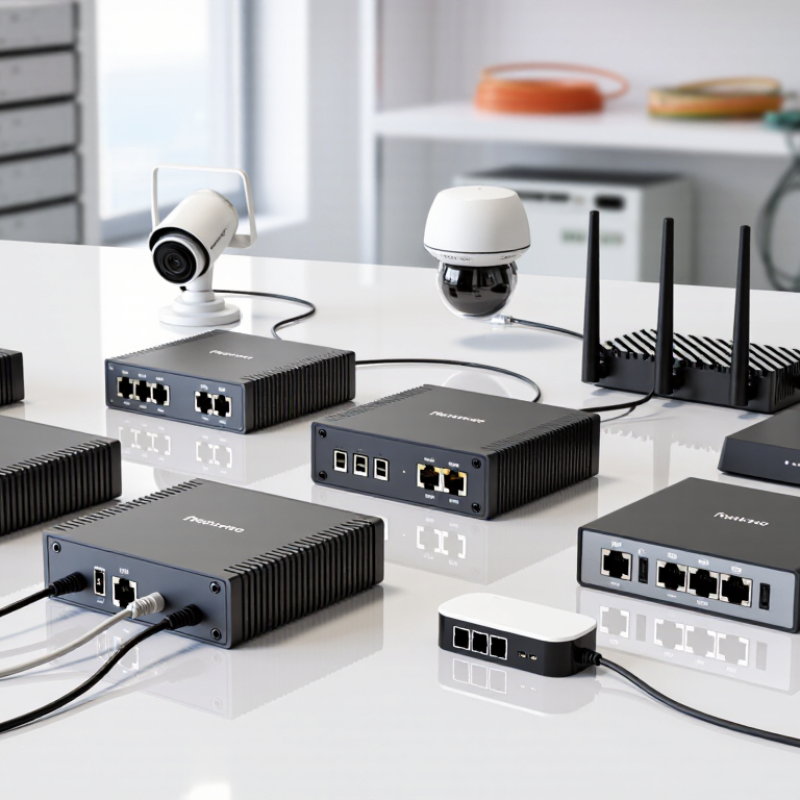
POE splitter technology separates network data from electrical power at the endpoint. It helps non-PoE devices use existing Ethernet cabling. A small splitter near a camera, access controller, or wireless terminal can reduce extra power wiring.
IEEE 802.3af
Supports up to 15.4 watts at the source. Its powered device output reaches about 12.95 watts.
IEEE 802.3at
Raises source power to 30 watts.
IEEE 802.3bt
Can deliver up to 90 watts from the source, depending on its class.
This matters in dense networks. Power loss, cable length, heat, and connector quality still affect actual performance. The 2024 Grand View Research report estimates the global Power over Ethernet market will grow at about 13% annually through 2030. That forecast reflects wider use in surveillance, access control, smart lighting, and connected buildings.
However, market estimates are not installation guarantees. A splitter may meet its label rating but fail under high temperature or unstable input voltage. Buyers should request thermal test records, efficiency curves, isolation details, and compatibility results before placing large orders. Reliable manufacturers should explain these limits clearly.
Tips:
Match the splitter output to the device voltage and wattage. Check IEEE class compatibility, cable category, and overload protection. Test a sample for at least 24 hours. A quiet enclosure is not proof of quality. Ask for measured data, not attractive claims.
Key Criteria for Evaluating Chinese POE Splitter Manufacturers
China Top POE Splitter Manufacturers for Global Buyers
Selecting a Chinese POE splitter manufacturer requires more than comparing unit prices. Grand View Research reports that the global Power over Ethernet market may grow at a double-digit rate through 2030. This growth increases supplier choices, but also raises quality risks. Check whether the factory follows IEEE 802.3af, IEEE 802.3at, or IEEE 802.3bt requirements. IEEE 802.3bt allows up to 90 watts from the power sourcing equipment. The powered device may receive up to 71.3 watts. Ask for test records, not only certificates.
A reliable manufacturer should show production controls, burn-in procedures, and traceable component records. Inspect connector quality, heat dissipation, surge protection, and waterproofing when outdoor use is expected. Request samples from different production batches. Measure voltage stability under continuous load. Confirm operating temperature ranges and packet-loss performance. TÜV Rheinland’s industry testing guidance repeatedly emphasizes documented verification and risk-based quality control. A factory video is useful, but it is not proof. I would not treat a low quotation as efficiency; hidden costs often appear through failures, replacements, and delayed shipments. No checklist is perfect.
Tips:
Compare samples under identical loads. Review ISO 9001 records, warranty terms, MOQ, lead time, and after-sales response. Ask for an independent inspection before shipment. Also, check whether the supplier can customize labels without changing internal protection components. That detail is easy to miss.
Leading China-Based POE Splitter Manufacturers for International Buyers
China-based POE splitter manufacturers serve international buyers with practical solutions for powering devices without built-in PoE support. A splitter separates network data from electrical power, usually delivering Ethernet and DC output through two leads. Buyers should confirm IEEE 802.3af, IEEE 802.3at, or IEEE 802.3bt compatibility, output voltage, wattage, connector type, and data speed before placing an order.
Manufacturing experience matters.
Reliable factories typically test insulation, voltage stability, heat performance, and continuous operation. Ask for sample units, wiring diagrams, test reports, and clear production tolerances. A useful sample check includes a camera, access point, or industrial terminal running for several hours under realistic load. Small details matter. A loose DC plug can interrupt an otherwise stable network.
International buyers also need traceable documentation and responsive technical support. Confirm whether testing follows applicable regional requirements, such as EMC, safety, or material restrictions. Do not rely only on attractive catalog images. Some product pages omit maximum cable length, thermal limits, or derating information. That gap deserves attention. Packaging should protect connectors from moisture and crushing during long-distance transport. Lead times, minimum order quantities, private labeling options, and spare-unit policies should be written into the purchase agreement. Even experienced buyers can overlook connector polarity or local plug requirements, so a final pre-shipment inspection remains worthwhile.
Product Standards, Customization, and Quality Control Considerations
For global buyers, POE splitter selection begins with standards, not catalogue photos. IEEE 802.3af, 802.3at, and 802.3bt define power levels, detection, and negotiation behavior. A splitter should also support applicable IEC 62368-1 safety requirements. MarketsandMarkets reported that the Power over Ethernet market could grow from about USD 1.9 billion in 2023 to USD 2.9 billion by 2028. This growth increases supplier choice, but not necessarily supplier discipline.
Customization should match the installation. Buyers may request 5V, 9V, or 12V output, different DC plugs, shielded cables, or outdoor protection. However, higher output power can increase heat inside a compact enclosure. During factory evaluations, ask for thermal images, load-test records, and samples from current production. Check output voltage after eight hours, not only after five minutes. A neat sample can still conceal inconsistent soldering. That is an uncomfortable point, but it matters.
Tips: Request reports tied to serial numbers. Verify input voltage, efficiency, ripple, insulation, and short-circuit protection. Ask whether testing covers every unit or only sampling. The 2024 Omdia enterprise networking outlook also highlights continued infrastructure upgrades, making stable compatibility increasingly important. Avoid accepting “customized” as a vague promise. Put connector drawings, tolerances, labeling, carton strength, and revision control into the purchase specification. One missing tolerance can create an expensive field return.
PoE Standard Power Levels Relevant to Splitter Selection
For global PoE splitter sourcing, the supported IEEE standard is a key specification. The chart compares the maximum power supplied by the PSE with the minimum guaranteed power available at the powered device. Higher-power applications require compatible input circuitry, thermal design, connector ratings, and verification testing.
Reference: IEEE 802.3af, IEEE 802.3at, and IEEE 802.3bt power-class specifications.
Export Support, Pricing, and Supplier Selection for Global Purchasers
Global buyers need more than a competitive quote from China POE splitter manufacturers. They need clear export support, stable quality, and responsive communication. Experienced suppliers should provide datasheets, wiring diagrams, sample units, and test reports before bulk orders. Ask whether the splitter supports the required voltage, power budget, port standard, and operating temperature. Small details matter during installation.
Pricing should be reviewed as a complete landed-cost estimate. Request separate figures for product price, tooling, packaging, freight, insurance, and applicable export charges. Confirm the quotation currency, payment terms, minimum order quantity, and validity period. A low unit price may hide weak packaging or inconsistent components. Request carton dimensions and gross weight. These figures help freight forwarders calculate realistic costs. Samples can also reveal connector fit, heat management, and labeling quality.
Supplier selection requires practical verification. Review factory experience, production capacity, inspection procedures, and average lead times. Ask for a sample approval process and a written response plan for defective units. Export documents should match the purchase contract and destination requirements. Communication may still be imperfect. Clarify every technical point in writing. A supplier that admits limitations can be more reliable than one promising everything. I would also compare two or three factories using the same specification sheet, because different assumptions can make pricing comparisons misleading.