How to Choose the Right Industrial Managed Poe Switch for Your Needs?
In today's fast-paced industrial environment, choosing the right Industrial Managed Poe Switch is critical for operational efficiency. According to a report by Grand View Research, the industrial PoE switch market is expected to grow significantly, reaching a valuation of over $1.2 billion by 2028. This growth highlights the increasing reliance on network solutions that enhance connectivity and power management.
Expert Jack Thompson, a leading authority in network infrastructure, emphasizes, "Selecting the right Industrial Managed Poe Switch can streamline operations and reduce downtime." His insights reflect the importance of understanding specific operational needs before making a decision. The complexities of industrial applications often require tailored solutions that traditional switches cannot provide.
Factors such as temperature range, number of ports, and power output must be assessed carefully. These details can impact the overall performance of your network. It’s essential to reflect on the unique demands of your industrial environment. Relying solely on specifications can lead to miscalculations. Choosing the perfect switch is not just about checking boxes; it's about aligning technology with business goals.
Understanding Power over Ethernet (PoE) Technology
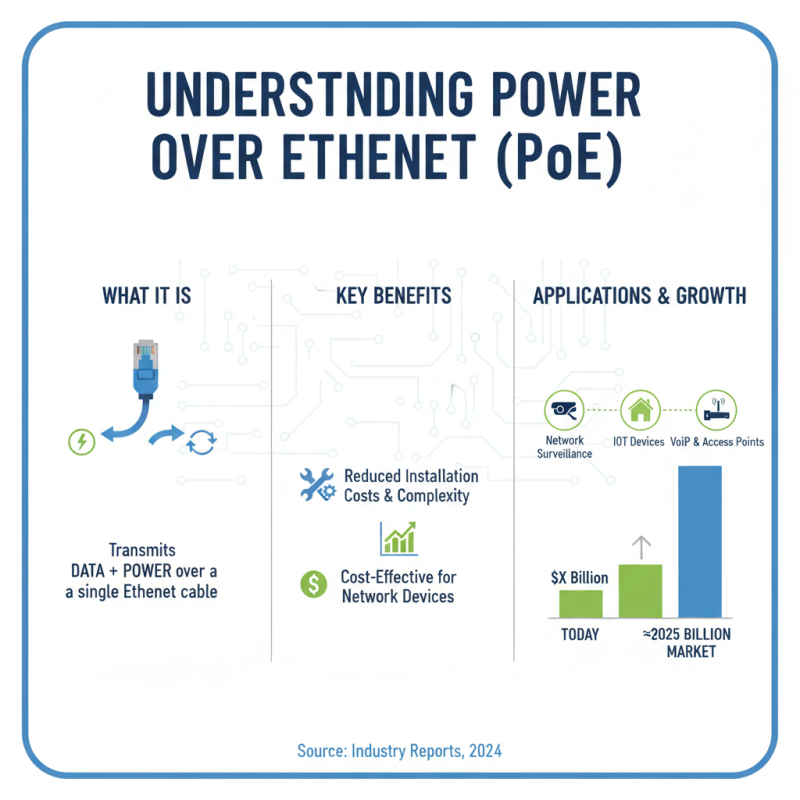
Power over Ethernet (PoE) technology integrates data and power transmission through a single cable. This setup significantly reduces installation costs and complexity. In recent years, PoE has gained traction in various industries, especially in network surveillance and IoT applications. Reports suggest that by 2025, the PoE market will reach approximately $3 billion, driven by the growing need for efficient power solutions.
The appeal of PoE lies in its versatility. It supports devices such as IP cameras, VoIP phones, and wireless access points. According to a 2020 industry survey, around 42% of organizations now use PoE technology. However, challenges remain, including range limitations and potential overloading risks. These concerns necessitate thorough analysis when selecting an industrial managed PoE switch. Understanding power budgets and compatibility with existing infrastructure is essential for optimal performance.
One must consider the growing demand for higher power levels. PoE standards, like IEEE 802.3af and 802.3at, dictate power delivery limits. The introduction of IEEE 802.3bt extends this capability, allowing up to 90 watts per port. This shift enables more powerful devices to thrive. Yet, not all switches can accommodate these advancements, making knowledge crucial in decision-making. Signs of mismatched equipment can lead to inefficiencies, highlighting the importance of proper selection.
Identifying Your Network Requirements for PoE Switches
Identifying your network requirements for Power over Ethernet (PoE) switches is crucial. The right switch ensures optimal performance for your devices. Start by assessing the number of devices requiring PoE. According to a report by the International Data Corporation (IDC), enterprises often underestimate this need, leading to network bottlenecks.
Evaluate the power requirements of your devices, too. A CCTV camera may require 15.4W, while more advanced devices might need up to 30W or more. Reports indicate that a mismatch in power allocation can result in device failure or reduced functionality. Always calculate the total power budget of your switches to avoid overloading.
Consider scalability as your network demands grow. Some organizations find themselves needing more ports and higher power capabilities as they expand. TechTarget found that nearly 52% of businesses experience growing pains due to inadequate network foresight. Investing in a switch that allows for future scalability could save costs long-term, despite the initial higher expense. Balancing current needs with future growth is not always straightforward. It requires careful planning and realistic assessments of your network environment.
Evaluating the Types of Managed PoE Switches Available
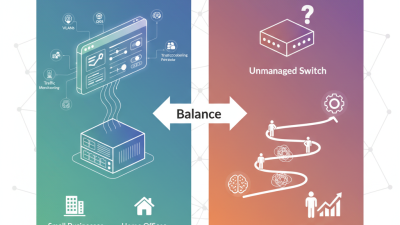
When evaluating the types of managed PoE switches available, understanding your specific needs is vital. Managed PoE switches offer enhanced control over your network. They can prioritize traffic, manage bandwidth, and ensure security. Different configurations exist, including layer 2 and layer 3 switches, each serving varying purposes.
Layer 2 switches are suitable for simple networks, while layer 3 switches provide advanced routing capabilities.
Consider the number of ports required for your setup. Some environments may only need a few ports, while others require more extensive connectivity. Look for scalability options. A switch should grow with your business needs. Port speed is another crucial factor. Many offer 1G ports, while some provide 10G capabilities. Evaluate your devices' compatibility with these speeds.
Features such as VLAN support and Quality of Service (QoS) are also important. VLANs allow network segmentation, improving performance. QoS ensures critical applications receive priority during high traffic.
Balancing these elements can be tricky. It’s essential to match your choice with your current infrastructure and future plans. Always consult knowledgeable sources to guide your decision-making.
Key Features to Consider When Selecting a PoE Switch
When selecting an industrial managed PoE switch, several key features deserve attention. The power output is crucial. Many switches support IEEE 802.3af and IEEE 802.3at standards. The latter provides up to 30W per port, which is essential for demanding devices like IP cameras and wireless access points. According to a recent report by MarketsandMarkets, the global PoE switch market is expected to grow by 15% annually. This growth highlights the importance of understanding your specific power requirements.
Port density is another critical factor. Industrial environments often need multiple ports to connect various devices. A switch with 8 to 48 ports can cater to large setups. Additionally, consider the switch's management features. Managed switches allow for better network control and monitoring, leading to improved security. A study from IDC indicates that organizations using managed switches see a 20% reduction in network downtime.
Finally, ensure that the switch is ruggedized for industrial conditions. It should have an extended temperature range and a robust design. Many facilities operate in environments with dust and moisture. A standard consumer switch might fail in these conditions. The total cost of ownership can outweigh initial purchase costs. Understanding these features helps avoid future complications.
Comparing Brands and Models for Best Value and Performance
When choosing an industrial managed PoE switch, comparing brands and models is essential. Not all switches deliver the same performance. Some may excel in power management, while others focus on data throughput. Consider what you prioritize. You might need higher PoE output for IP cameras or better data handling for network traffic.
Look beyond specifications. User reviews can provide insights into real-world performance. Installation and configuration ease affect long-term satisfaction. Is the user interface friendly? Are updates released regularly? Sometimes, a less popular model offers hidden gems in reliability or support.
Explore detailed comparisons. Some features, like VLAN support or network monitoring tools, enhance functionality. However, these may not be necessary for all applications. Assess your unique requirements. Reflect on your priorities. This analysis leads to a better investment in a switch that meets your operational needs effectively.
Comparison of Different Managed PoE Switches Performance
This chart compares the performance scores of various managed PoE switches. The performance score is an essential metric that helps to determine the overall effectiveness and suitability of the switches for industrial applications.