- [email protected]
- Mon - Sat at 7:00AM to 9:00PM
Leave Your Message
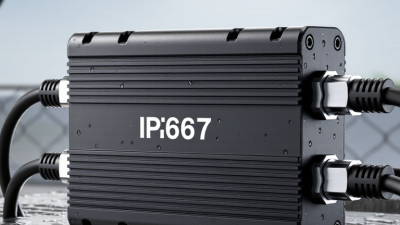
Outdoor networks rarely fail in comfortable conditions. They face rain, dust, ultraviolet exposure, temperature changes, and unstable cable routes. For these installations, the 2026 Best IP67 PoE Splitter for Outdoor Networks? guide examines how a rugged splitter performs beyond a product specification sheet. The focus is practical: enclosure sealing, PoE compatibility, output voltage, installation clearance, grounding, and long-term connector protection. A genuine Ip67 Poe Spiltter should tolerate temporary water immersion under defined testing conditions, but IP67 alone does not guarantee reliable outdoor operation. That distinction matters.
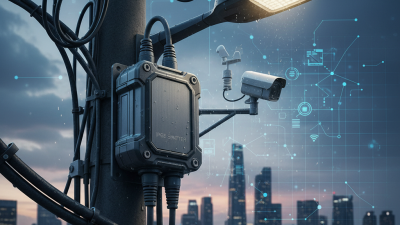
Field experience shows small details often decide network stability. A loose gland can admit moisture. A poorly supported cable can stress the Ethernet port. Heat can also reduce component life inside a sealed housing. This guide compares relevant evidence, including manufacturer documentation, supported IEEE PoE standards, operating temperatures, load limits, and independent testing where available. It also considers common deployment scenes, such as security cameras beside gates, wireless access points on warehouse walls, and sensors placed near irrigation systems. The best choice depends on the complete system, not the enclosure label alone. It may be tempting to select the highest wattage model. That can be a mistake. Readers should verify switch output, splitter input range, device requirements, cable length, and local installation practices before purchase. Specifications can look convincing. Real weather is less forgiving.
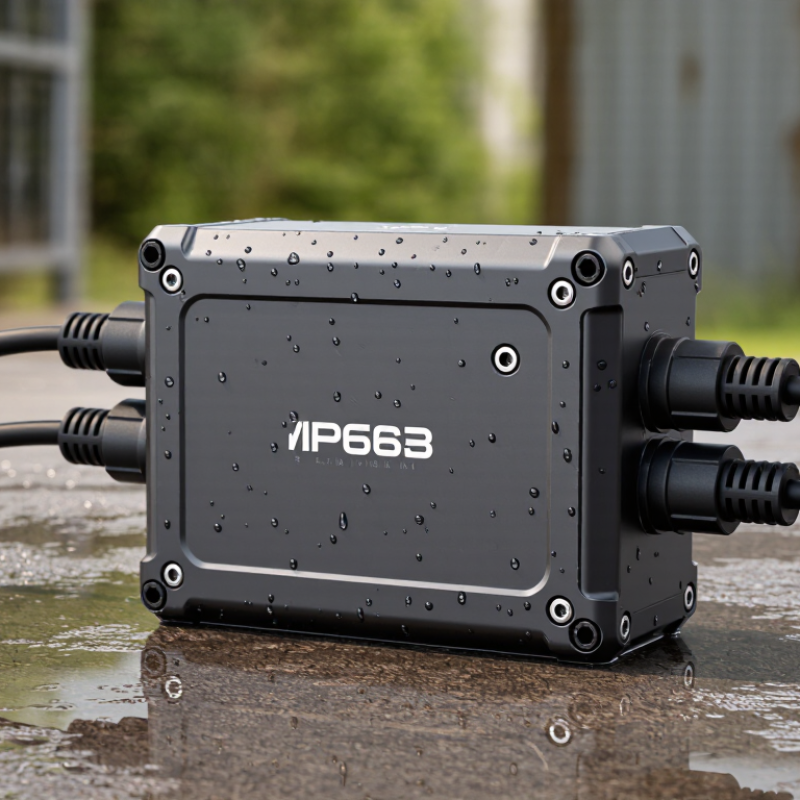
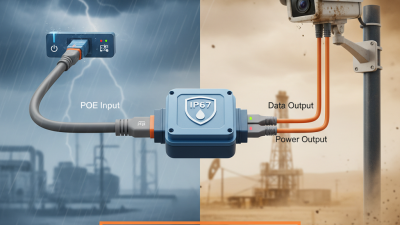
An IP67 PoE splitter is an outdoor interface that separates power from Ethernet data. It receives both through one PoE cable, then sends data and low-voltage DC power to a non-PoE device. This supports cameras, access points, sensors, and intercoms near walls or gates. Under IEC 60529, IP67 means the enclosure is dust-tight and can withstand temporary immersion in water up to one meter for 30 minutes. It does not mean unlimited rain exposure or pressure washing.
The splitter must match the network standard and the device’s voltage requirements. IEEE 802.3af commonly delivers up to 15.4 watts from the source, while 802.3at supports up to 30 watts. Actual power at the endpoint is lower. Check cable length, startup demand, and conversion loss. Outdoor installation also needs sealed cable glands, UV-resistant cabling, proper drainage, and surge protection. A field mistake is treating IP67 as a complete outdoor solution. Moisture can still enter through an open connector. It happens.
Grand View Research estimated the global Power over Ethernet market at about USD 1.4 billion in 2022, with strong growth projected through 2030. That expansion reflects wider deployment of connected outdoor equipment. However, market growth does not replace site testing. Temperature swings, condensation, and voltage drop can expose weaknesses that laboratory ratings miss. Measuring voltage during device startup remains a practical, often overlooked check.
An IP67 PoE splitter separates power and data from a Power over Ethernet connection so that a non-PoE outdoor device can receive a suitable DC voltage and an Ethernet data connection. The table below summarizes the key specifications and verification points for selecting an outdoor-ready splitter.
| Evaluation Dimension | Recommended Specification or Verified Fact | Why It Matters Outdoors | What to Check Before Purchase |
|---|---|---|---|
| Ingress Protection | IP67 under IEC 60529: dust-tight and protected against temporary immersion in water up to 1 metre for up to 30 minutes under specified test conditions. | Helps protect the enclosure from rain, dust, and accidental short-term submersion. | Confirm that the complete installed assembly, including cable glands and connectors, maintains the claimed protection level. |
| PoE Input Standard | Support for IEEE 802.3af, IEEE 802.3at, or IEEE 802.3bt, depending on the required power budget. | Ensures compatibility with the PoE switch or injector supplying the splitter. | Match the splitter input standard with the PSE output standard and the connected device's power demand. |
| Available PoE Power | IEEE 802.3af provides up to 15.4 W at the PSE; 802.3at up to 30 W; 802.3bt Type 3 up to 60 W; and 802.3bt Type 4 up to 90 W at the PSE. The powered device receives less after cable and conversion losses. | Prevents voltage drop, unstable operation, and unexpected shutdown of outdoor cameras, access points, sensors, or gateways. | Compare the splitter's stated output power with the device's maximum operating and startup requirements. |
| DC Output Voltage | Common output options include 5 V, 9 V, 12 V, 15 V, 18 V, or 24 V DC, depending on the model. The output must match the powered device. | Incorrect voltage can cause malfunction or permanent equipment damage. | Verify output voltage, polarity, connector size, and whether the voltage is fixed or selectable. |
| DC Output Current | The rated output current should be equal to or greater than the connected device's maximum required current. | Provides sufficient capacity during startup, heating, infrared illumination, radio transmission, or peak processing loads. | Calculate output power as Voltage × Current and leave practical operating margin above the device rating. |
| Ethernet Speed | 10/100 Mbps is sufficient for many basic cameras and sensors; Gigabit Ethernet is preferable for high-resolution video, wireless access points, and data-intensive systems. | Reduces the risk of creating a bandwidth bottleneck in the outdoor link. | Check the splitter's data pass-through speed, connector type, and compatibility with the network equipment at both ends. |
| Network Cable | Use Cat5e or better twisted-pair Ethernet cable for standard PoE operation. The commonly specified maximum Ethernet channel length is 100 metres, including patch cords. | Appropriate cable selection improves signal integrity and limits voltage loss. | For outdoor runs, select cable with a weather-resistant jacket, UV resistance, suitable temperature rating, and proper grounding or surge protection where required. |
| Operating Temperature | Choose an industrial or extended-temperature model when the installation is exposed to freezing conditions, direct sunlight, or high enclosure temperatures. | Temperature affects power-conversion efficiency, component life, and startup reliability. | Review the manufacturer's stated operating range and derating curve instead of relying only on a nominal temperature figure. |
| Surge and ESD Protection | Outdoor installations should use documented Ethernet surge protection and electrostatic-discharge protection appropriate to the site. | Long outdoor cables can act as paths for lightning-induced surges and transient voltages. | Check the protection specifications, grounding method, replacement procedure, and whether additional protection is needed at the building entry point. |
| Isolation and Polarity | The splitter should provide a correctly regulated DC output with clearly documented polarity and electrical isolation characteristics. | Reduces the risk of ground-loop problems and damage to the connected non-PoE device. | Confirm the wiring diagram, isolation rating if required, DC plug polarity, and compatibility with the load input. |
| Enclosure and Installation | A sealed, UV-resistant enclosure with secure cable entry is preferable for exposed locations. Mounting hardware should be suitable for the installation surface. | Mechanical sealing and cable management are essential to preserve IP protection over time. | Inspect gasket quality, connector sealing, strain relief, mounting orientation, and drainage or condensation-control provisions. |
| Power Conversion Efficiency | Select a model with a published efficiency figure and thermal performance data. Higher efficiency generally produces less waste heat. | Lower heat generation can improve reliability inside sun-heated outdoor enclosures. | Review efficiency at the expected input voltage and load, not only the maximum rated value. |
| Best-Fit Application | Suitable applications include outdoor IP cameras, wireless access points, access-control devices, environmental sensors, intercoms, and industrial Ethernet endpoints that do not contain a PoE input. | Allows standard Ethernet infrastructure to power devices that require a separate DC input. | Confirm the device's voltage, current, connector, data speed, environmental rating, and startup power requirement. |
| Selection Priority for 2026 | IP67 enclosure + required IEEE PoE compatibility + correct DC output + suitable temperature range + surge protection + verified installation accessories. | Outdoor reliability depends on the complete electrical and mechanical installation rather than on the IP rating alone. | Request a complete datasheet, test standards, wiring diagram, environmental ratings, and installation instructions before deployment. |